

 Strange Deaths & CrimesDonald HarveyAngel of Death Serial Killer and Toledo Prison MurderVIEW ARCHIVE →
In February 1857, Sylvania resident Return Jonathan Meigs Ward murdered his wife, Olive Davis Ward, inside their home and then tried to make both her body and her disappearance vanish. He dismembered her remains and burned portions of them while giving conflicting explanations for where she had gone. Investigators eventually built a murder case from physical and circumstantial evidence even though no intact body remained. Ward was convicted and sentenced to hang. The case became stranger after conviction, when he confessed to killing Noah Hall and a traveling peddler years earlier in Richland County, then withdrew those confessions before his execution. Olive’s murder is proven; the other two killings remain disputed.

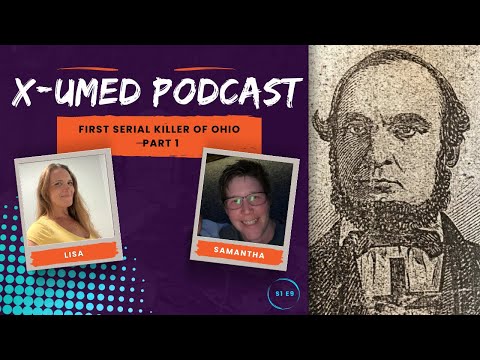
AI recreation from the only drawing of Return Jonathan Meigs Ward
NW OHIO
1800s
Multiple Locations
Ward’s documented crime eventually developed a second life in Sylvania folklore. Modern ghost stories associate the Uptown/Main Street area with apparitions, footsteps, unexplained voices and shadowy figures. Olive is usually at the center of the tradition, although some versions attach the activity to Ward himself.
The historical problem is location. Nineteenth-century Sylvania does not map neatly onto the modern downtown landscape, and later retellings sometimes attach the murder or haunting to surviving properties without establishing that those buildings were actually Ward’s home. Local paranormal investigations document that a haunting tradition exists, but they do not establish that any reported phenomenon is caused by Olive or Ward.
The haunting therefore belongs in the Archive as documented local folklore attached to a documented murder. Olive’s murder is history; claims about her ghost are legend.
Ward was already being transformed into something larger than an ordinary murderer while he was still alive. His trial attracted extensive newspaper attention, and after his conviction an 1857 account appeared under the sensational title “The Triple Murderer — The Life and Confession of Return J. M. Ward.” Newspapers published his confessions, descriptions of his behavior, accounts of the execution and competing versions of his final statements. The Return Ward legend therefore began almost immediately rather than generations later.
The two alleged earlier murders strengthened that reputation. A. J. Baughman’s 1903 history of Cass Township records that Ward operated the Eagle House, identifies Noah Hall as having been killed there in 1850, and describes the later disappearance of a pack peddler who had stayed at the hotel. Those events gave later writers a historical framework for Ward’s jailhouse confessions, even though neither alleged murder was adjudicated against him.
Later retellings increasingly called Ward “Ohio’s first serial killer.” That label makes sense only if the Hall and peddler killings are attributed to him. The story’s evolution is therefore unusually visible: a documented wife-murder became a triple-murder narrative, then a retrospective serial-killer story, and eventually part of Sylvania’s ghost lore.
Return Jonathan Meigs Ward came to Sylvania with a past that later became central to the mystery surrounding him. By 1857 he was married to Olive Davis Ward. In February of that year Olive disappeared, and Ward offered explanations for her absence that did not satisfy neighbors or investigators. Suspicion intensified as authorities examined the Ward home and found evidence suggesting that a violent death had occurred there.
The prosecution faced an unusual problem: there was no intact corpse to present to the jury. Ward had attempted to destroy Olive’s remains by dismembering and burning them. Investigators instead relied on blood evidence, burned material, bone fragments, witness testimony, Ward’s behavior and the contradictions in his accounts. Medical testimony concerning the recovered fragments was important, although nineteenth-century forensic medicine could not provide the kind of laboratory certainty expected today.
The accumulated evidence was enough. Ward was convicted of Olive’s murder and sentenced to death. While awaiting execution he admitted killing Noah Hall and a traveling peddler in Richland County. The confession was especially striking because later county history independently recorded Hall’s killing at Ward’s Eagle House and the disappearance of a peddler associated with the same place. Hall’s case had already produced suspicion and prosecutions involving other men.
Ward then complicated the historical record himself. Before his execution he withdrew the additional confessions and maintained that Olive was the only person he had killed. He was hanged in Toledo on June 12, 1857. The contradiction between the jailhouse confessions and his final denial is why the additional victim count cannot be treated as settled fact.
For the Dark Archive, the distinction is important. Ward is unquestionably a convicted murderer responsible for Olive Davis Ward’s death. The evidence connecting him to Hall and the unidentified peddler is historically significant and deserves attention, but it is not equivalent to a conviction. The modern description “Ohio’s first serial killer” is therefore a retrospective interpretation rather than a nineteenth-century legal finding.
Ward’s own statements are the most important first-hand accounts connected to the disputed victim count. After his conviction he admitted killing Olive but gave versions of the circumstances that attempted to lessen his culpability. He later confessed to killing Noah Hall and another man, commonly described as a traveling or pack peddler, in Richland County.
Facing execution, Ward reversed himself again. Contemporary reporting records that he withdrew the Hall and peddler confessions and insisted Olive was the only person he had killed. Accounts of his final statements and last moments also vary, showing that competing versions of the Ward story were already circulating at the time of his death.
Modern paranormal investigators have recorded claims of unexplained activity at Sylvania locations associated by local tradition with the case. Those reports are useful for documenting the continuing folklore, but they do not establish a historical or supernatural connection between a particular experience and Olive or Ward.
The biggest disagreement is the victim count. Ward confessed to killing Noah Hall and a traveling peddler in addition to Olive, then denied those two murders immediately before his execution. That makes “Ohio’s first serial killer” a reasonable historical nickname, but not the same thing as three court-proven murders.
Even the older cases shift in retelling. A 1903 Richland County history dates Hall’s death to March 18, 1850, while some modern accounts use 1851. The missing peddler is called Lovejoy in later accounts, but the county history simply describes an unnamed pack peddler who vanished after staying at Ward’s Eagle House.
Ward did not simply kill Olive and hide her body. He attempted to make the body disappear. Contemporary accounts describe him cutting her remains apart and burning portions in a stove. When investigators searched the house, there was no recognizable corpse waiting to be found. The case instead had to be assembled from what he had failed to destroy: blood evidence, burned material and fragments believed to be human bone recovered from the ashes.
That made the trial unusually grim for 1857. Physicians were asked to interpret damaged remains with the limited forensic tools available at the time, and not every recovered fragment could be identified with modern certainty. The jury nevertheless accepted the accumulated physical and circumstantial evidence and convicted Ward without an intact body.
Ward’s execution had its own bleak aftermath. He was hanged in Toledo on June 12, 1857, and contemporary accounts describe his body remaining suspended before it was taken down. His remains were ultimately buried without the kind of public memorial that later folklore would give his name.
There is another disturbing layer beneath the “serial killer” label: other men had already fallen under suspicion in the Noah Hall case. Ward’s later confession suggested that investigators may have spent years looking in the wrong direction, but his decision to withdraw that confession ensured the question could never be cleanly resolved. Olive’s murder ended with a conviction. The full number of people Return Ward killed did not.
A. J. Baughman, History of Richland County / Cass Township (1903) — documents Ward’s Eagle House, Noah Hall’s 1850 killing, the trial and acquittal of Myers and McGarvy, and the later disappearance of a pack peddler.
Geri Walton — Return Ward: Ohio’s First Serial Killer — detailed secondary reconstruction with citations to 1857 newspapers including the Buffalo Courier, Louisville Daily Courier and Holmes County Republican.
Gaye E. Gindy, Murder in Sylvania, Ohio: As Told in 1857 — Sylvania-focused history compiled from contemporary documents, newspapers and court material.
 Strange Deaths & CrimesDonald HarveyAngel of Death Serial Killer and Toledo Prison MurderVIEW ARCHIVE →
 Strange Deaths & CrimesCleveland Torso MurdersThe Mad Butcher of Kingsbury RunVIEW ARCHIVE →
 Strange Deaths & CrimesMatthew HoffmanMount Vernon Triple Murder, Kidnapping and the Leaf HouseVIEW ARCHIVE →Strange Deaths & Crimes
AI recreation from the only drawing of Return Jonathan Meigs Ward
AI recreation from the only drawing of Return Jonathan Meigs Ward
Ward’s documented crime eventually developed a second life in Sylvania folklore. Modern ghost stories associate the Uptown/Main Street area with apparitions, footsteps, unexplained voices and shadowy figures. Olive is usually at the center of the tradition, although some versions attach the activity to Ward himself.
The historical problem is location. Nineteenth-century Sylvania does not map neatly onto the modern downtown landscape, and later retellings sometimes attach the murder or haunting to surviving properties without establishing that those buildings were actually Ward’s home. Local paranormal investigations document that a haunting tradition exists, but they do not establish that any reported phenomenon is caused by Olive or Ward.
The haunting therefore belongs in the Archive as documented local folklore attached to a documented murder. Olive’s murder is history; claims about her ghost are legend.
Ward was already being transformed into something larger than an ordinary murderer while he was still alive. His trial attracted extensive newspaper attention, and after his conviction an 1857 account appeared under the sensational title “The Triple Murderer — The Life and Confession of Return J. M. Ward.” Newspapers published his confessions, descriptions of his behavior, accounts of the execution and competing versions of his final statements. The Return Ward legend therefore began almost immediately rather than generations later.
The two alleged earlier murders strengthened that reputation. A. J. Baughman’s 1903 history of Cass Township records that Ward operated the Eagle House, identifies Noah Hall as having been killed there in 1850, and describes the later disappearance of a pack peddler who had stayed at the hotel. Those events gave later writers a historical framework for Ward’s jailhouse confessions, even though neither alleged murder was adjudicated against him.
Later retellings increasingly called Ward “Ohio’s first serial killer.” That label makes sense only if the Hall and peddler killings are attributed to him. The story’s evolution is therefore unusually visible: a documented wife-murder became a triple-murder narrative, then a retrospective serial-killer story, and eventually part of Sylvania’s ghost lore.
Ward’s own statements are the most important first-hand accounts connected to the disputed victim count. After his conviction he admitted killing Olive but gave versions of the circumstances that attempted to lessen his culpability. He later confessed to killing Noah Hall and another man, commonly described as a traveling or pack peddler, in Richland County.
Facing execution, Ward reversed himself again. Contemporary reporting records that he withdrew the Hall and peddler confessions and insisted Olive was the only person he had killed. Accounts of his final statements and last moments also vary, showing that competing versions of the Ward story were already circulating at the time of his death.
Modern paranormal investigators have recorded claims of unexplained activity at Sylvania locations associated by local tradition with the case. Those reports are useful for documenting the continuing folklore, but they do not establish a historical or supernatural connection between a particular experience and Olive or Ward.
The biggest disagreement is the victim count. Ward confessed to killing Noah Hall and a traveling peddler in addition to Olive, then denied those two murders immediately before his execution. That makes “Ohio’s first serial killer” a reasonable historical nickname, but not the same thing as three court-proven murders.
Even the older cases shift in retelling. A 1903 Richland County history dates Hall’s death to March 18, 1850, while some modern accounts use 1851. The missing peddler is called Lovejoy in later accounts, but the county history simply describes an unnamed pack peddler who vanished after staying at Ward’s Eagle House.
Ward did not simply kill Olive and hide her body. He attempted to make the body disappear. Contemporary accounts describe him cutting her remains apart and burning portions in a stove. When investigators searched the house, there was no recognizable corpse waiting to be found. The case instead had to be assembled from what he had failed to destroy: blood evidence, burned material and fragments believed to be human bone recovered from the ashes.
That made the trial unusually grim for 1857. Physicians were asked to interpret damaged remains with the limited forensic tools available at the time, and not every recovered fragment could be identified with modern certainty. The jury nevertheless accepted the accumulated physical and circumstantial evidence and convicted Ward without an intact body.
Ward’s execution had its own bleak aftermath. He was hanged in Toledo on June 12, 1857, and contemporary accounts describe his body remaining suspended before it was taken down. His remains were ultimately buried without the kind of public memorial that later folklore would give his name.
There is another disturbing layer beneath the “serial killer” label: other men had already fallen under suspicion in the Noah Hall case. Ward’s later confession suggested that investigators may have spent years looking in the wrong direction, but his decision to withdraw that confession ensured the question could never be cleanly resolved. Olive’s murder ended with a conviction. The full number of people Return Ward killed did not.
A. J. Baughman, History of Richland County / Cass Township (1903) — documents Ward’s Eagle House, Noah Hall’s 1850 killing, the trial and acquittal of Myers and McGarvy, and the later disappearance of a pack peddler.
Geri Walton — Return Ward: Ohio’s First Serial Killer — detailed secondary reconstruction with citations to 1857 newspapers including the Buffalo Courier, Louisville Daily Courier and Holmes County Republican.
Gaye E. Gindy, Murder in Sylvania, Ohio: As Told in 1857 — Sylvania-focused history compiled from contemporary documents, newspapers and court material.
Strange Deaths & CrimesDonald HarveyAngel of Death Serial Killer and Toledo Prison MurderVIEW ARCHIVE →Strange Deaths & CrimesCleveland Torso MurdersThe Mad Butcher of Kingsbury RunVIEW ARCHIVE →Strange Deaths & CrimesMatthew HoffmanMount Vernon Triple Murder, Kidnapping and the Leaf HouseVIEW ARCHIVE →