X-UMED | Dark History, Paranormal & Folklore

LAST UPDATED: NOVEMBER 14, 2026
googlemaps
Cleveland
Cleveland Grays Armory

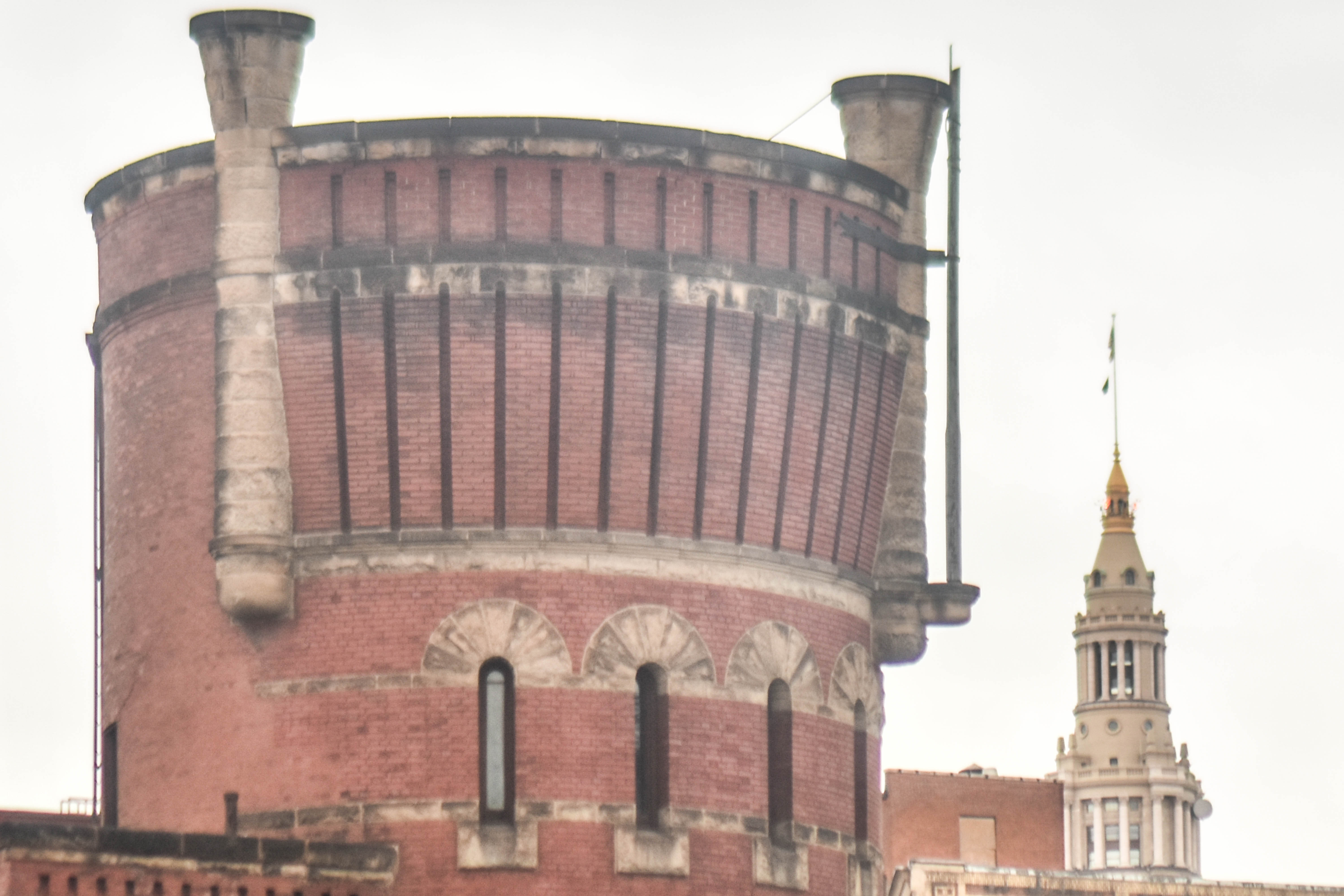
The Cleveland Grays built their fortress-like armory on Bolivar Road in the 1890s. The same building that held military drills hosted the Cleveland Orchestra’s first concert. Later, accounts of footsteps, a woman in white, and a dead member’s distinctive pipe smoke made the armory part of Cleveland’s ghost lore.

Cleveland Grays Armory entrance
REGION

Northeast

ERA

Multiple Eras

ENVIRONMENT

Multiple Locations

HISTORICAL BACKGROUND

Cleveland Grays Armory entrance

The company came first

Cleveland’s volunteer City Guard organized in 1837. Its gray uniforms eventually gave the company its better-known name. The group came out of the city’s early efforts to maintain order and went on to supply men for military service. The Civil War connections belong to the history of the company. Its downtown armory on Bolivar Road came decades later. That distinction matters when a retelling puts Civil War activity inside the present building.

The fortress on Bolivar Road

The cornerstone was laid on Decoration Day, May 30, 1893. Architect Fenimore C. Bate designed a building that announces itself as an armory from the street. Its windows narrow up the tower and its brick walls rise from a heavy stone base. The building’s organization is practical, too. Offices and gathering rooms occupy the front, while the big drill hall sits behind them. The Historic American Buildings Survey documents the structure as HABS OH-158, including floor plans, elevations, and sections. The drawings make it possible to see how a narrow street entrance led to a space built for groups moving together.

From drills to orchestra rehearsals

The Grays had a headquarters, but Cleveland also gained a large venue it could use for civic celebrations and entertainment. The city’s 1896 centennial included programs at the armory. Cleveland Historical records an appearance by the Metropolitan Opera Company in 1902 and a speech by William Howard Taft in 1916. On December 11, 1918, Nikolai Sokoloff conducted the first Cleveland Orchestra concert there. The orchestra’s own chronology supplies that date, which corrects the 1917 date on the Cleveland Historical entry. Decades later the Western Reserve Theater Organ Society installed and refurbished a Wurlitzer in the drill hall. Music in this building has a substantial paper trail of its own.

A military name that outlasted the military unit

Ohio’s historic marker identifies World War I as the last active service of the company, while individual members continued to serve in later conflicts. The institution continued as a historic and ceremonial organization. That helps explain why the armory’s story includes uniforms and drill space alongside concerts, club gatherings, and collections. For a later Cleveland story where the building itself shaped events, see the archive’s East Ohio Gas Explosion and Fire of 1944.

STORY & LEGENDS

Treat story development as a separate research problem: identify the earliest recoverable printed or oral reference, then track later additions, media influence, tourism, paranormal-investigation culture and internet-era standardization.

ORIGIN STORY

Footsteps and the woman in white

The recurring sound in modern retellings is footsteps. Cleveland Scene puts some of the accounts at the stairs and near the third-floor bar. Case Western Reserve’s Halloween coverage repeats accounts of footsteps, music, and a lady in white crossing the ballroom. Another version attaches the figure to a piano and says she follows it when it moves. The room and the instrument are fairly stable features in the story, but there is no securely identified historical woman or dated original statement in the sources reviewed.

The uniformed man

Cleveland Scene recounts a story set in the 1970s. A student who lived in the building as a custodian reportedly told coworkers that a man in an old Grays uniform came through a wall while he played piano and went back into it. The printed article establishes that the account was in circulation by the time of publication. The reported decade comes from the later retelling. A second story in the same article concerns workers who heard movement on the stairs and later found painting supplies scattered inside the locked building. The names of the student and workers are absent from that account.

How the stories found an audience

The Scene article connects the armory’s ghost reputation with organized psychic tours. It credits Frank Tesch, who oversaw the building, with helping the stories circulate during a time when the Grays needed public attention and support. That gives the lore an identifiable route into popular circulation. The article is also earlier evidence than many web lists that repeat the stories today.

ALTERNATE VERSIONS

Preserve material alternate versions when they change the alleged victim, date, cause, location, creature description, ritual or historical explanation. Minor wording differences should not be treated as separate versions.

WITNESS ACCOUNTS

Bill Jenkins and Lou Grosser’s pipe

Maintenance supervisor Bill Jenkins told Cleveland Scene that he and another person noticed an odor he associated with Lou Grosser’s tobacco. In the first incident another person noticed the smell and brought Jenkins to the room. Jenkins said he recognized it and recalled a later occasion when someone else noticed it too. Jenkins was speaking about his own experience. The other people were part of his account, and the source does not provide separate interviews with them.

Jenkins distinguished the odor from what he considered ordinary old-building sounds. He also said he had never seen anything strange there. His account is evidence that he reported smelling something familiar. Its source remained unknown to him. It gives no basis to describe him as seeing Grosser or to treat the smell as a demonstrated posthumous encounter.

MORBID FACTS

The funeral in the drill hall

In Cleveland Scene’s reporting, Major Lou Grosser died in the drill hall, and his funeral took place there too. That means the room people later associated with his supposed return was also publicly associated with his death and remembrance. Retellings sometimes add that he died of a heart attack while working. The source reviewed for the death and funeral does not establish that medical cause. A dated obituary or funeral notice would be stronger evidence before adding it as fact.

A room built for several kinds of sound

The drill hall was large enough for military formations, audiences, and eventually a theater pipe organ. The historic survey shows how it sits behind the front rooms. A report placing music, footsteps, or voices in an apparently empty part of the armory still needs the conditions of the individual event. Large connected rooms, occupied floors, and a stairwell can make it difficult to place an ordinary sound. Those features are relevant context for the reports, but they do not identify what anyone heard on a particular night.

CURRENT DAY

The Cleveland Grays Armory Museum is at 1234 Bolivar Road, Cleveland, Cuyahoga County. The museum’s website invites visitors to request tours through its official contact information and advertises some events. Treat building access as arranged or event-based. The historic marker records the same street address and is the reference point for this archive pin.

WHAT WE CAN VERIFY

Additional Context

  • Buildings and dates

    The Library of Congress survey and the Ohio historical marker both put construction in 1893. Cleveland Historical gives May 30, 1893, for the cornerstone ceremony. Use that date for the cornerstone, and 1837 for the organization. Use the orchestra’s December 11, 1918 date for its first concert.

    Death and haunting claims

    The Grosser death and funeral are described in published local reporting. The claimed medical cause and the dates of the odor incidents remain unverified. Jenkins is an identifiable witness for the odor report. The uniformed figure and remodeling incidents appear as attributed retellings in a local article and lack identified original witnesses in the accessible account. The woman in white appears in multiple modern summaries, but repetition cannot establish a shared original witness or independently establish a historical identity.

SOURCES

HISTORICAL PHOTO GALLERY

A CLOSER LOOK THROUGH THE YEARS

KEEP EXPLORING

MORE STORIES FROM X-UMED'S DARK ARCHIVE

X-UMED EPISODE/VIDEO

CATEGORIES

Dark History
Folklore
googlemaps

LOCATION & ACCESS

googlemaps
Cleveland
REGOIN
Northeast
COORDINATES
41.499239
-81.681781
ADDRESS
1234 Bolivar Road, Cleveland, Cuyahoga County, Northeast Ohio
ACCESS
Unknown
LOCATION ON MAP
HELP US DIG DEEPER

have a firsthand account, an old photo, or a correction about this place?

SHARE THIS STORY
X
Reddit
Threads
WhatsApp
Email
StumbleUpon
Facebook
SEARCH THE DARK ARCHIVE
148STORIES
UNEARTHED
358MORE STILL
BURIED
29% OF THE ARCHIVE UNEARTHED