X-UMED | Dark History, Paranormal & Folklore

LAST UPDATED: NOVEMBER 8, 2026
googlemaps
Gettysburg
Devil’s Den
The fight for Houck’s Ridge, a moved body and Gettysburg’s ghost stories

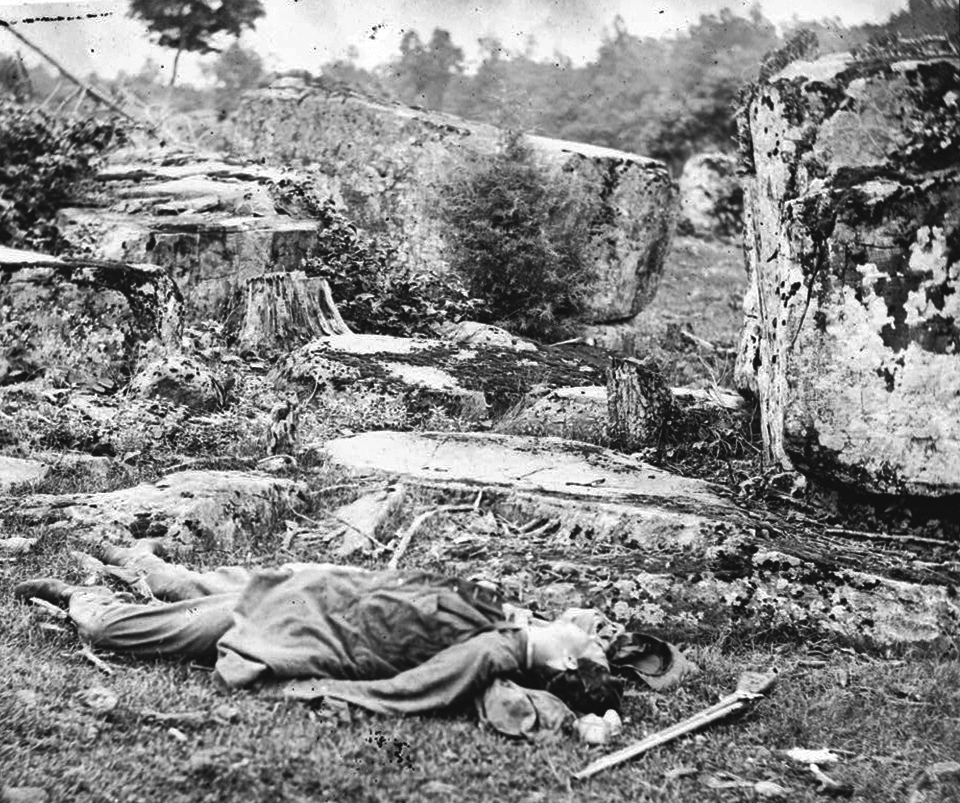
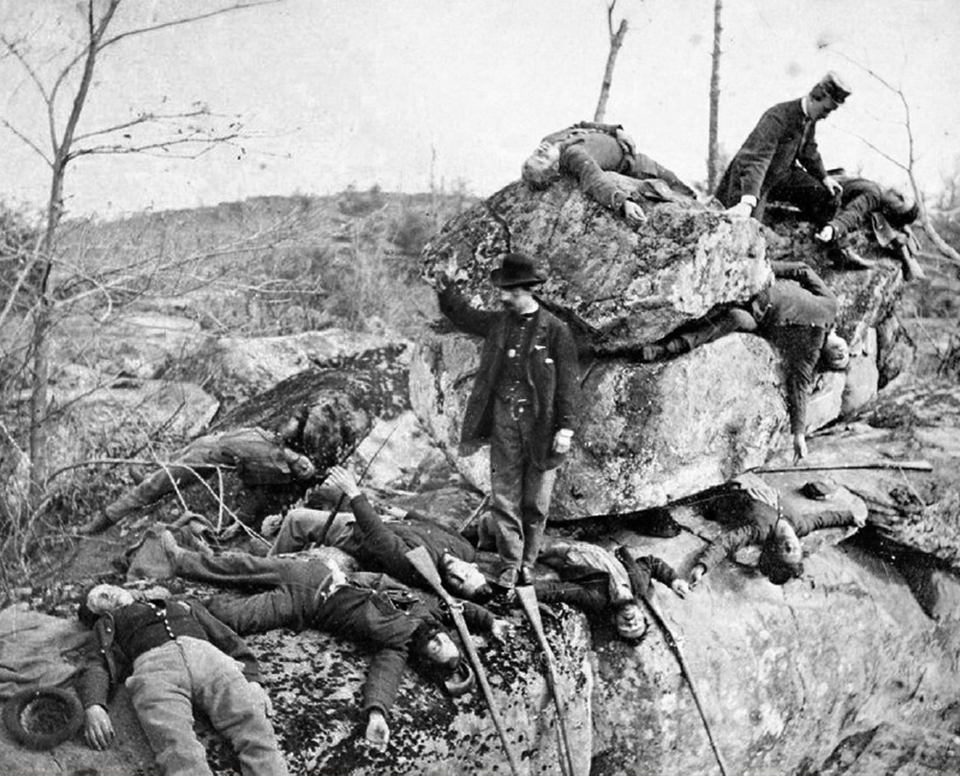
At Devil’s Den, one of Gettysburg’s best-known photographs shows a dead soldier behind a low stone wall. The man was real. The scene was arranged. A different photograph taken among the same rocks shows men who only pretended to be dead. Those two episodes belong to the history of a place where visitors would later tell stories about cameras jamming, figures appearing in photographs, and a barefoot stranger who was gone by the time they looked back.

Devil’s Den boulders beyond the Plum Run valley viewed from Little Round Top
REGION

South Central Pennsylvania

ERA

1800s–Present

ENVIRONMENT

National military park and Civil War battlefield

HISTORICAL BACKGROUND

Devil’s Den boulders beyond the Plum Run valley viewed from Little Round Top
Devil’s Den from Little Round Top

July 2, 1863, at the southern end of the Union line

Devil’s Den is the jumble of boulders at the southern end of Houck’s Ridge, across the Plum Run valley from Little Round Top. If you read a battlefield map, the two places can look almost on top of each other. On the ground there is a low valley between them and a sharp change in elevation. The boulders could shield individual men. They also broke up movement and left some positions exposed to fire from elsewhere. The National Park Service’s terrain overview explains why the shape of the ground mattered as much as the names on the map.

On July 2, the second day of battle, Union infantry held the ridge in the sector of the Third Corps. Captain James E. Smith’s 4th New York Independent Battery was positioned above the rocks. Confederate brigades from John Bell Hood’s division attacked the sector, with Texans, Georgians and the 3rd Arkansas involved in fighting at and near the Den. The National Park Service battle narrative describes pressure from the front and flank that forced the Union defenders from the position and cost Smith three guns. Once Confederates held the rocks, they could bring pressure against Little Round Top from across the valley. The Den and the hill were separate positions in a connected fight.

The New York State Military Museum’s monument records for the 124th New York show what can be established at the scale of a regiment. Colonel Augustus Van Horne Ellis and Major James Cromwell fell in the fighting. The inscription names other men killed, including Captain Isaac Nichols, Sergeant John D. Drake and Private William Lamoreaux. Smith’s battery has its own monument on the high ground. The men named on those monuments can be tied to units and actions. A single death toll for the rocks is harder to pin down because the fighting and the records extend across the ridge, valley and neighboring ground.

The cave, the boulders and the name

The park’s historical study of the Slaughter Pen and southern Houck’s Ridge cites Smith’s July 20, 1863 report as the earliest official battle-related use it located. It also records later local testimony that the name was in use before the battle. Battlefield historian John B. Bachelder said the Den originally meant a hole under rock ledges and that many visitors who thought they had seen it had only seen the larger group of boulders. The testimony is evidence for an earlier naming tradition, while Smith’s report is a dated military use. Both are stronger guides than the idea that soldiers simply invented the name after seeing what the battle had done.

STORY & LEGENDS

The 1880s folklore and the modern battlefield ghost

An early print lead is Emanuel Bushman’s August 19, 1884 piece in the Gettysburg Compiler. The History Bandits’ discussion of that article quotes Bushman describing local stories of uncanny sights and sounds around the rocks. He also relayed a story that he attributed to Indigenous tradition. That attribution comes from a nineteenth-century local writer, without an independently identified Indigenous source. His article is evidence that stories about the rocks were being recorded by the 1880s. It does not establish when people first told them or show that the barefoot Civil War figure was part of that early tradition.

The catalog for Mark Nesbitt’s first Ghosts of Gettysburg volume dates its original release to 1991 and identifies Devil’s Den among the subjects covered. That is a firm publication lead for modern Den lore. It cannot by itself date the first appearance of the barefoot or camera stories. A modern retelling places some reports in the 1970s, but the date of an alleged visit and the date its story entered print are two different things.

ORIGIN STORY

The barefoot man and the problem with the camera

A familiar modern story describes a disheveled, barefoot man in ragged clothes who directs a visitor’s attention away from him and then disappears. In some versions he seems like another person on the battlefield until the visitor tries to find him again. Other stories give him a floppy hat, make him look like a reenactor, or have a figure appear only after film is developed. History’s survey of Gettysburg folklore records the barefoot version alongside reports of distant gunfire, screams and trouble with cameras.

Another version gives the camera trouble a motive. In the Gettysburg Network of 1863’s account of the folklore, Mark Nesbitt’s speculation links it to the soldier whose body was moved for the famous photograph. On that reading, a man photographed without his consent returns to interfere with people taking pictures. It is a modern story built around something the photographers really did. The connection between the photographed man and the barefoot figure is a later interpretation, with no established identification of either one.

ALTERNATE VERSIONS

What the camera is supposed to catch

In one version, the barefoot stranger is visible to the visitor and then disappears. In another, he shows up only when film is developed. In the camera-failure version, the visitor comes away without a usable image. Those are three different claims. A figure on film would give someone a frame to examine. A stopped camera would raise questions about that camera and what happened before it stopped. A disappearing stranger starts with what the visitor could see from where they were standing. The modern accounts collected by History bring those motifs together, but the descriptions alone give no way to settle whether the same figure appears in any two of them.

The body in the enclosure has also gone through a change in identity. Gardner’s published title gave readers a sharpshooter. The modern evidence gives us an unidentified Confederate soldier whose body the photographers moved. In the ghost story he can become a man who remembers what the photographers did and resents it. The title, the forensic comparison and the haunting each attach a different story to the same image. The surviving evidence is strongest where the rocks and the photographs can be compared.

WITNESS ACCOUNTS

What people said happened and what survives

In M. B. Henry’s 2020 retelling, one photographer reportedly saw a shaggy stranger among the rocks. A second visitor supposedly found a similar figure on developed film and later got damage on the same side of another roll. Henry credits Nesbitt’s book. The visitors are unnamed in the article and the negatives or prints were unavailable for this review. Without the image sequence, a camera inspection or a verifiable time and place, the story remains a report about a photograph.

Henry also retells an incident in which Nesbitt said he was present while his camera and those of a father and son had trouble. This is different from an anonymous report that a figure appeared on film. It has a named participant, but the retelling does not supply the equipment logs, original footage or an independent report from the other two people. Henry adds a firsthand observation of her own. She photographed the rocks in 2016 and her equipment worked. One ordinary visit cannot decide what happened to someone else’s film, but it makes clear that the purported effect is neither universal nor reliably demonstrated.

Triangular Field, Little Round Top and Devil’s Den also appear together in general accounts of battlefield hauntings. Reports attached to the field or hill should stay attached to those locations unless the witness actually placed the encounter among the Den’s rocks. Proximity helps explain why the stories get told together. The archive’s Moonville railroad ghost traditions offer another example of stories shifting among places close enough to share a name in casual conversation. Keeping the original place attached to each report makes those changes easier to follow.

MORBID FACTS

One body, six exposures and a new place to die

Alexander Gardner and Timothy O’Sullivan’s Gettysburg photographs allow an unusual comparison. In the Library of Congress’s account of William Frassanito’s research, four exposures of the same body were made near its probable original position and two in the stone enclosure that Gardner described as a sharpshooter’s shelter. The park’s original-location comparison puts the two locations roughly forty yards apart. The number is an estimate, and accounts differ on the distance. The repeated details of the body and the different rocks behind it are what carry the argument.

The low wall and the propped rifle make the staged image look as if it explains how the soldier died. The National Park Service comparison of the finished scene says the weapon is unlikely to have been a sharpshooter’s rifle and the man probably fell elsewhere. Gardner’s published caption also describes encountering the body again in November. That claim is part of Gardner’s narrative and should not be treated as a burial record. The soldier’s name and final burial remain unestablished. The Library of Congress catalog notes that a proposed identification as Andrew Hoge does not fit his regiment’s location during the battle.

Men alive enough to pose as corpses

Peter Weaver came to the rocks on November 11, more than four months after the fight. In the Park Service’s comparison of his images, living men pose as dead soldiers and two physicians appear to inspect the scene in one view. The group lies among the same boulders that make actual aftermath photographs so disturbing. Weaver’s staging and the earlier relocation of an actual corpse are distinct incidents. A date, photographer and matching view of the landscape can make a difference between reading a picture as evidence of July combat and reading it as a November performance.

Who was left in the temporary graves

Gettysburg’s National Park Service account of Confederate reburials explains how Rufus Weaver later relied on a burial journal kept by physician J. W. C. O’Neal and on knowledge of grave locations to recover remains. Markers were lost and some graves had become hard to identify. That is battlefield-wide history. There is no documented link in these records between the photograph and a named grave at the Den. It is possible to trace the soldier’s image from rock to rock more confidently than to trace the man himself.

The two corpse photographs in the gallery are meant to be read together. In the first, the man is lying on open ground near the rocks. In the second, the wall, rifle and narrow opening make it look as though he occupied a defensive position when he died. The Library of Congress discussion of the photograph and its caption shows how the published story encouraged that reading. When people later imagined the man returning to stop cameras from working, they were responding to an image whose persuasive power came partly from the way the photographers arranged it.

CURRENT DAY

WHAT WE CAN VERIFY

Confirmed History

  • Smith’s battery lost three guns in the July 2 fighting. A July 20 military report uses Devil’s Den, and later recollections describe local use of the name before the battle.

Unverified Claims

  • The soldier’s identity, exact burial and links to the barefoot stranger are unresolved. Later camera stories lack original negatives or independently documented equipment failures.

Important

  • The Library of Congress and National Park Service trace the same deceased soldier across six photographs and two locations. Peter Weaver separately photographed living men posing as dead on November 11.

HISTORICAL PHOTO GALLERY

A CLOSER LOOK THROUGH THE YEARS

KEEP EXPLORING

MORE STORIES FROM X-UMED'S DARK ARCHIVE

X-UMED EPISODE/VIDEO

Leave a Reply

CATEGORIES

Ghost Stories
Ghosts & Hauntings
◆Historic Places
◆War History
googlemaps

LOCATION & ACCESS

googlemaps
Gettysburg
REGOIN
South Central Pennsylvania
COORDINATES
39.79144
-77.24175
ADDRESS
Devil’s Den parking area, Sickles Avenue, Gettysburg National Military Park, Adams County, Pennsylvania.
ACCESS
Open to Public
LOCATION ON MAP
HELP US DIG DEEPER

have a firsthand account, an old photo, or a correction about this place?

SHARE THIS STORY
X
Reddit
Threads
WhatsApp
Email
StumbleUpon
Facebook
SEARCH THE DARK ARCHIVE
148STORIES
UNEARTHED
358MORE STILL
BURIED
29% OF THE ARCHIVE UNEARTHED