X-UMED | Dark History, Paranormal & Folklore

LAST UPDATED: NOVEMBER 9, 2026
googlemaps
Detroit
Nain Rouge
Cadillac’s warning, the disasters Detroit remembered and the red figure people still chase

In the oldest Detroit version I could verify, a fortune-teller tells Cadillac to appease the little red figure he will meet. He hits it with his cane instead. Marie Caroline Watson Hamlin put the story on paper in the 1880s, long after Cadillac’s time, then sent the figure through some of Detroit’s worst days. The creature Detroiters dress up to chase through the Cass Corridor today owes as much to what later generations did with Hamlin’s story as to the creature she put on the page.

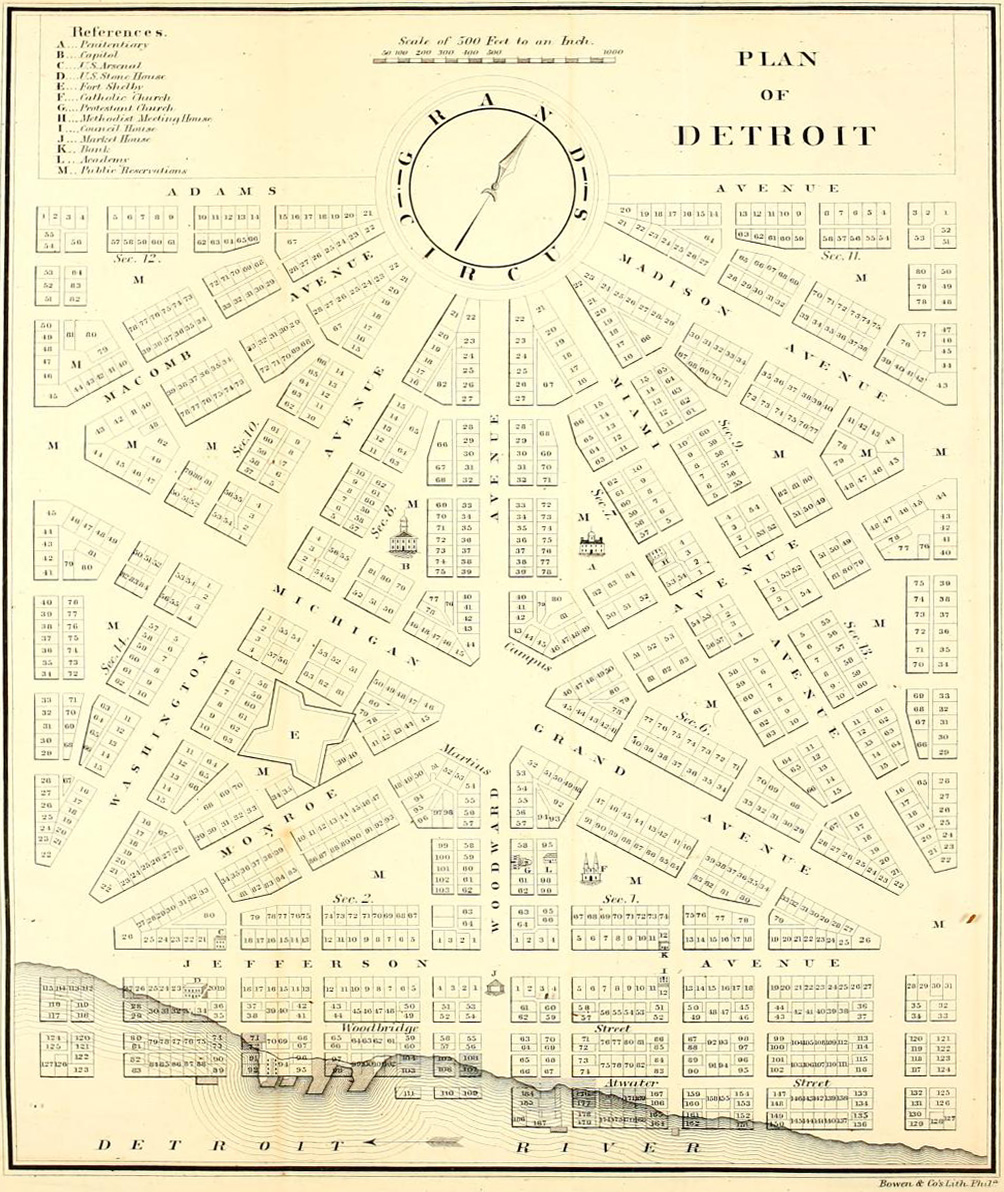
An engraved plan of the early fort and nearby streets
REGION

Southeast Michigan

ERA

1700s–Present

ENVIRONMENT

Urban folklore and public event reference point

HISTORICAL BACKGROUND

An engraved plan of the early fort and nearby streets
An early plan of Fort Detroit

The man who had already changed his own name

The Detroit Historical Society’s biography of Cadillac traces him back to Antoine Laumet, born in France in 1658. He took the name La Mothe Cadillac and claimed a noble standing he did not possess. He led the French expedition that established Fort Pontchartrain du Détroit in 1701. The settlement’s name came from the strait. There were already Indigenous communities and political relationships in the region. Founding a French post was one event in a place with a much longer history.

Hamlin knew the outcome of Cadillac’s career when she wrote the legend. She could build a warning that fits the rise and fall she was about to describe. The real founder’s adopted name, arguments with officials and later career have a history outside the story. That makes him an unusually good choice for a tale about someone convinced he can outmaneuver a warning. The biography establishes his actions as a colonial official. The beach confrontation comes through a later piece of folklore.

Detroit as Hamlin knew it

The Detroit Historical Society’s account of Legends of Le Détroit explains how Hamlin mixed local history, family narratives and folklore in a collection published in Detroit. The society dates it to 1883. The digitized second edition has an 1884 title page, an 1883 copyright, and an introduction dated December 1883. She lived in a city that had already passed through French, British and American rule. People knew the events she referred to through family memory, local records and stories about places whose names had survived. The book gives us an opportunity to see how those strands looked to one writer in the nineteenth century.

STORY & LEGENDS

The first printed version has an ending people leave out

At the end of the Cadillac episode, Hamlin says the figure had not reappeared since Hull’s surrender. She also leaves open the possibility that it will return if the city is threatened. That ending leaves an opening for a storyteller living through a new calamity. When a later list adds twentieth-century disasters, it is extending the chronology, rather than repeating what Hamlin printed.

Hamlin uses the figure elsewhere in the book. In her Bloody Run chapter, she also puts the Nain Rouge in a story about the place and its memory. That gives the same collection more than one setting for the figure. An old book is a primary source for the version it contains. It is still nearly two centuries removed from the purported Cadillac encounter. Earlier oral circulation is possible, but it cannot be precisely dated or attributed from the printed passage alone.

ORIGIN STORY

She recognized it. He struck it.

In Hamlin’s early printed text, a warning comes before the encounter. The prophecy asks Cadillac to appease the Nain Rouge. Later, Cadillac and his wife are walking when they meet the creature near the shore. It has a red face, a strange gleaming eye and pointed teeth. Madame Cadillac recognizes it first. Cadillac strikes at it with his cane. It laughs and vanishes, and she reminds him what he was told about provoking it.

That exchange leaves more room than the short version about a demon cursing Detroit. The creature can be read as threatening. It can also be read as giving a warning the most powerful person in the story ignores. Hamlin then attaches it to later moments of trouble. It runs along the shore before the fighting at Bloody Run, appears in the fire of 1805 and turns up in the fog before William Hull surrenders the city in 1812. In this version it is seen around events in different ways. The people who see it are not all given names, and the book does not supply testimony collected at the time.

ALTERNATE VERSIONS

The warning becomes the thing people want to drive away

In Charles M. Skinner’s Myths and Legends of Our Own Land, the creature takes pleasure in trouble. Skinner repeats the major Detroit episodes and brings the figure into stories about mills, stolen rides on ponies and an encounter the neighbors think involved a skunk. Those are useful differences. Hamlin’s version can read like a warning and a judgment on Cadillac. Skinner’s Nain can become a mischievous figure in a much smaller quarrel.

The modern Marche has staged a banishment and also invited questions about whom Detroit should blame for its troubles. Metro Times’ account of the parade’s changes describes readings in which the Nain is a protector, or in which Cadillac’s behavior is the part that deserves attention. Some writers see possible French and Indigenous influences. The region’s cultural exchange is well documented. This review did not locate a pre-Hamlin source from an identified Indigenous community that establishes a direct line to this specific figure. A modern interpretation deserves to be credited as an interpretation.

WITNESS ACCOUNTS

Where the witness chain breaks

Madame Cadillac has a speaking part in Hamlin’s scene, but it is Hamlin who gives us the words. The source is a nineteenth-century literary rendering. The later fire story is attributed more broadly to old inhabitants, without statements that can be traced to individuals. The text is valuable for dating what the book’s first readers could learn about the creature. It gives us no independently recorded eighteenth-century sighting.

Visit Detroit’s modern summary includes the 1960s unrest and a 1976 blizzard among events later linked to the Nain Rouge. Those are modern folklore leads. A dated account by someone who claims to have been there, ideally with details recorded before the later retellings, would be needed to trace them further. The tourism article establishes that the stories circulate. It does not establish an encounter on a particular street during either event.

MORBID FACTS

The creek already had a history before the omen

On July 31, 1763, a British force moved against Pontiac’s encampment and met an ambush near Parent’s Creek. The Detroit Historical Society’s account explains how the fighting attached the name Bloody Run to the creek. Captain James Dalzell died. In a later story, a tree could become a relic of the battle. One postcard in the society’s collection even placed Pontiac’s death there. That is wrong. A souvenir caption can make a claim about a battlefield seem older or firmer than it is, in much the same way an illustration of a red figure can make people think a witness saw it.

Elmwood Cemetery’s history traces the waterway through the later cemetery and down toward the river. The stream people can still find and the fighting near it belong to physical and military history. The red figure on the shoreline is what Hamlin’s book adds. A visitor who knows which source supplies which detail can take the fighting seriously without losing the story told about it.

The fire left a city to redraw

The historical account of the 1805 fire records a fire that destroyed most of the settlement. Hot ashes from a pipe were rumored as a cause, and the precise source of ignition remained unsettled. The rebuilding brought plans for a different Detroit. Hamlin puts the red face among the burning buildings. That is the story someone added to a real disaster with its own unresolved question about how it started. The actual fire explains why a later map looks different. The legend explains why people remember an image of somebody moving through the flames.

In 1812, Hull surrendered the fort to the British. The Detroit Public Library’s War of 1812 collection identifies the capitulation document, and the National Park Service’s military account describes the pressure on Hull and the decision he made. Hamlin adds a figure in the fog. There is enough in the surrender record to understand what people feared on that morning without using the legend to explain the military outcome.

The deaths behind a much later omen

When a modern telling ties the Nain to Detroit’s 1967 uprising, it can flatten several days of real violence into one spooky anecdote. The Detroit Historical Society gives the conventional count of 43 deaths. The University of Michigan’s Detroit Under Fire project documents 47 through its broader research and explains why it considers even that number incomplete. The count changes depending on which deaths the researcher includes and what can be recovered from different records. Neither account is evidence for an apparition. They show where the documented human story goes once you ask more specific questions than whether Detroit was under a curse.

CURRENT DAY

WHAT WE CAN VERIFY

Confirmed History

  • Hamlin’s nineteenth-century book preserves a printed version. Its digitized title page reads 1884, with copyright in 1883.

Unverified Claims

  • No contemporary record cited here corroborates Cadillac’s encounter or a sighting connected to a later disaster.

Important

  • Bloody Run, the 1805 fire, the 1812 surrender and the 1967 uprising have historical records. Writers and storytellers attached the figure to those events at different times.

HISTORICAL PHOTO GALLERY

A CLOSER LOOK THROUGH THE YEARS

KEEP EXPLORING

MORE STORIES FROM X-UMED'S DARK ARCHIVE

X-UMED EPISODE/VIDEO

Leave a Reply

CATEGORIES

◆Urban Legends
Folklore
Ghost Stories
◆Historical Mysteries
googlemaps

LOCATION & ACCESS

googlemaps
Detroit
REGOIN
Southeast Michigan
COORDINATES
42.34093
-83.06079
ADDRESS
Cass Park, near Temple Street and Second Avenue, Detroit, Michigan, in the Cass Corridor.
ACCESS
Open to Public
LOCATION ON MAP
HELP US DIG DEEPER

have a firsthand account, an old photo, or a correction about this place?

SHARE THIS STORY
X
Reddit
Threads
WhatsApp
Email
StumbleUpon
Facebook
SEARCH THE DARK ARCHIVE
148STORIES
UNEARTHED
358MORE STILL
BURIED
29% OF THE ARCHIVE UNEARTHED