Dark ArchiveHart Island and New York City’s Potter’s FieldBurial labor, missing ledgers and the fight to visit the gravesVIEW ARCHIVE →LAST UPDATED: NOVEMBER 7, 2026
Gnadenhutten Massacre Site
The Harvest Party That Never Came Home
The people who returned to Gnadenhutten in the winter of 1782 came for food. Forced from their villages before the harvest, they were trying to bring back corn for families facing hunger. Pennsylvania militiamen captured them, voted on whether they should live, and killed the prisoners on March 8. Ninety-six is the number most often remembered. Behind it were children, parents, interpreters, and community leaders whose commitment to peace offered no protection.
REGION
East Central Ohio
ERA
1700s–Present
ENVIRONMENT
Monument / Memorial
HISTORICAL BACKGROUND
A community before it became a memorial
Gnadenhutten was a Moravian mission community on the Tuscarawas River, established in 1772. Lenape, also called Delaware, and Mohican converts lived in the mission network. Its name is commonly translated as “tents of grace.” The site’s own history describes Mahican elder Joshua establishing the second village after Schoenbrunn. These were communities of homes, fields, work, and worship. Calling the victims simply “the Indians at a mission” hides the different people and their own roles in building the settlement.
Neutrality made them vulnerable to both sides
During the American Revolution, British authorities suspected the Christian communities of helping the Americans. Their refusal to join fighting did not place them outside the war. In 1781 they were compelled to leave the Tuscarawas villages for the Sandusky area. Crops remained behind. The Gnadenhuetten Monument Society’s account, printed in 1870 describes an increasingly desperate winter: dwindling corn, hungry cattle, and families without enough food. This later source uses strongly religious and prejudiced language, but it preserves a crucial sequence. Displacement and hunger came before the return journey and the massacre.
They returned to harvest, not to raid
Groups went back to the abandoned fields in early 1782. The returnees included women and children as well as men. Their presence at Gnadenhutten was later treated as incriminating by the militia, although the food shortage explains why they were there. David Williamson led the attacking force. Recent raids elsewhere supplied an excuse for collective punishment: the prisoners were made to answer for violence the available historical accounts do not show them committing. Ethnicity and possession of goods became substitutes for a fair inquiry.
A promise of safety helped disarm them
The 1870 narrative says the militiamen approached people working in the fields with assurances that they would take them toward Pittsburgh for protection. The villagers surrendered weapons and prepared to travel. John Martin, a Native assistant, went to Salem, and people from there were brought into Gnadenhutten too. This account describes a gradual capture, carried out partly through deception. The victims were not an attacking force defeated in a fight. Their trust and their desire to avoid violence made the militia’s task easier.
The vote and the final night
The prisoners were confined, with men separated from women and children. According to the Monument Society narrative, Williamson asked men favoring their survival to step out of line; only sixteen or eighteen did so. The majority chose killing. The exact tally is a reported historical detail, not a surviving roll-call inspected here. The captives were allowed a final night. Accounts describe prayers, hymns, and people asking forgiveness of one another. Those details belong to the tradition transmitted by survivors and Moravian writers, rather than a word-for-word recording of everyone’s final hours.
March 8, 1782
Prisoners were taken into two buildings and killed at close range. The later narrative describes a cooper’s mallet used in one of them, followed by scalping and the killing of people still alive among the bodies. Buildings were then burned. The broad event is supported by historical institutions and the site’s interpretation. The vivid dialogue and individual actions in the 1870 publication require attribution. A clear account of the massacre does not need invented last words or an imagined scene inside a victim’s mind.
People whose names survived
The 1870 account identifies Joseph Shabosh, killed before the main slaughter, and a woman called Christina who pleaded for the prisoners. It names Samuel Moore, Tobias Jones, Isaac Glickican, and John Martin among the Native religious assistants who died. Samuel is described as literate in English and useful as an interpreter; Glickican had been a sachem. These details recover more of the victims than a single death total can. Their Christian names are the names this source transmits, not a complete recovery of their identities or biographies.
The site became a place of remembrance much later
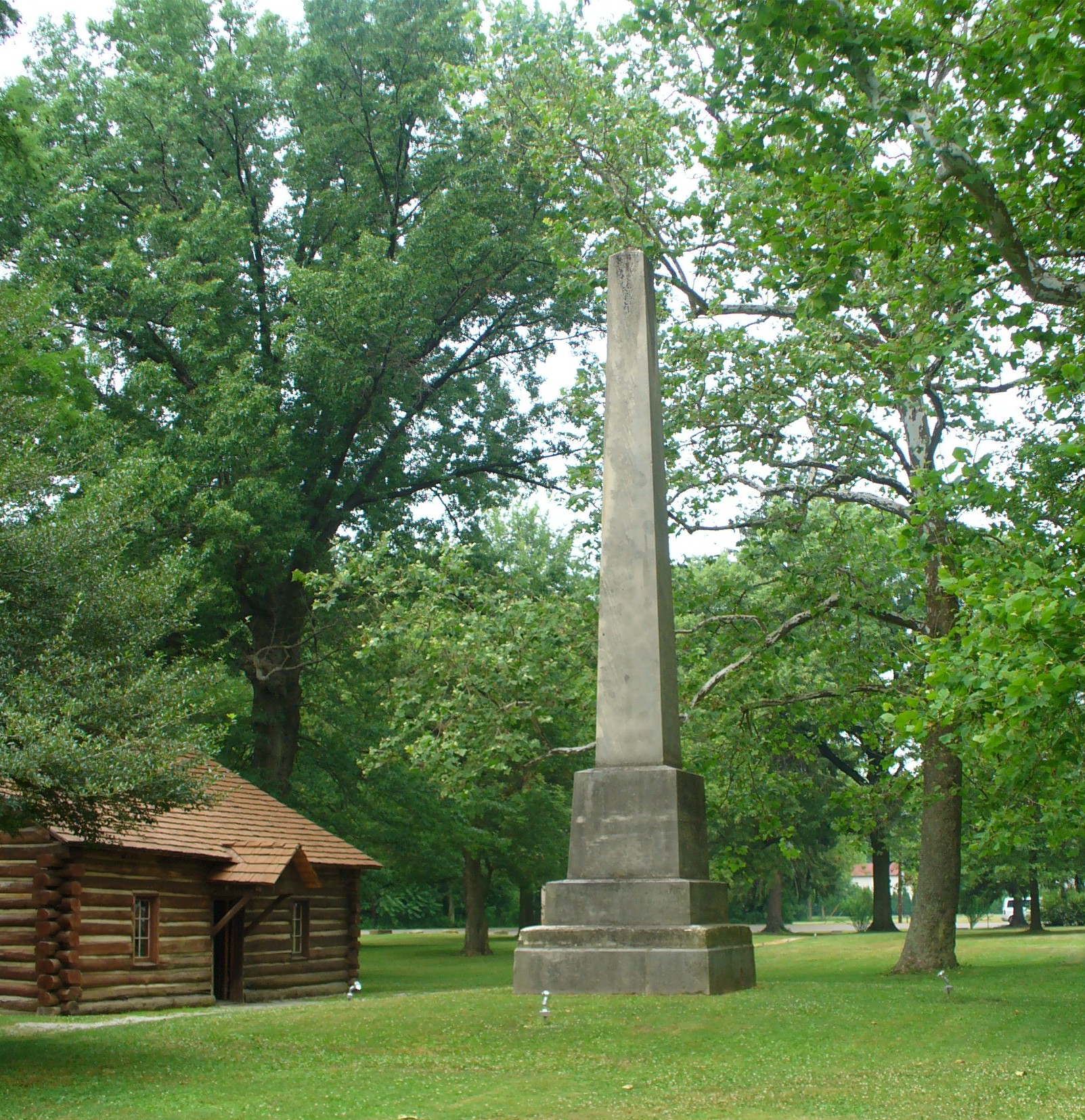
The burned village did not immediately become the orderly memorial seen today. The 1870 booklet says exposed remains were buried only after a long delay. Its account of “some twenty years” should not be silently reconciled with later versions assigning a precise recovery year. A monument society formed in 1843. Ohio Memory’s account distinguishes the 1870 publication from the monument’s establishment in 1872. Reconstructed buildings, the mound, the monument, and the museum represent different stages of remembrance, not intact buildings that survived the fire.
Current day
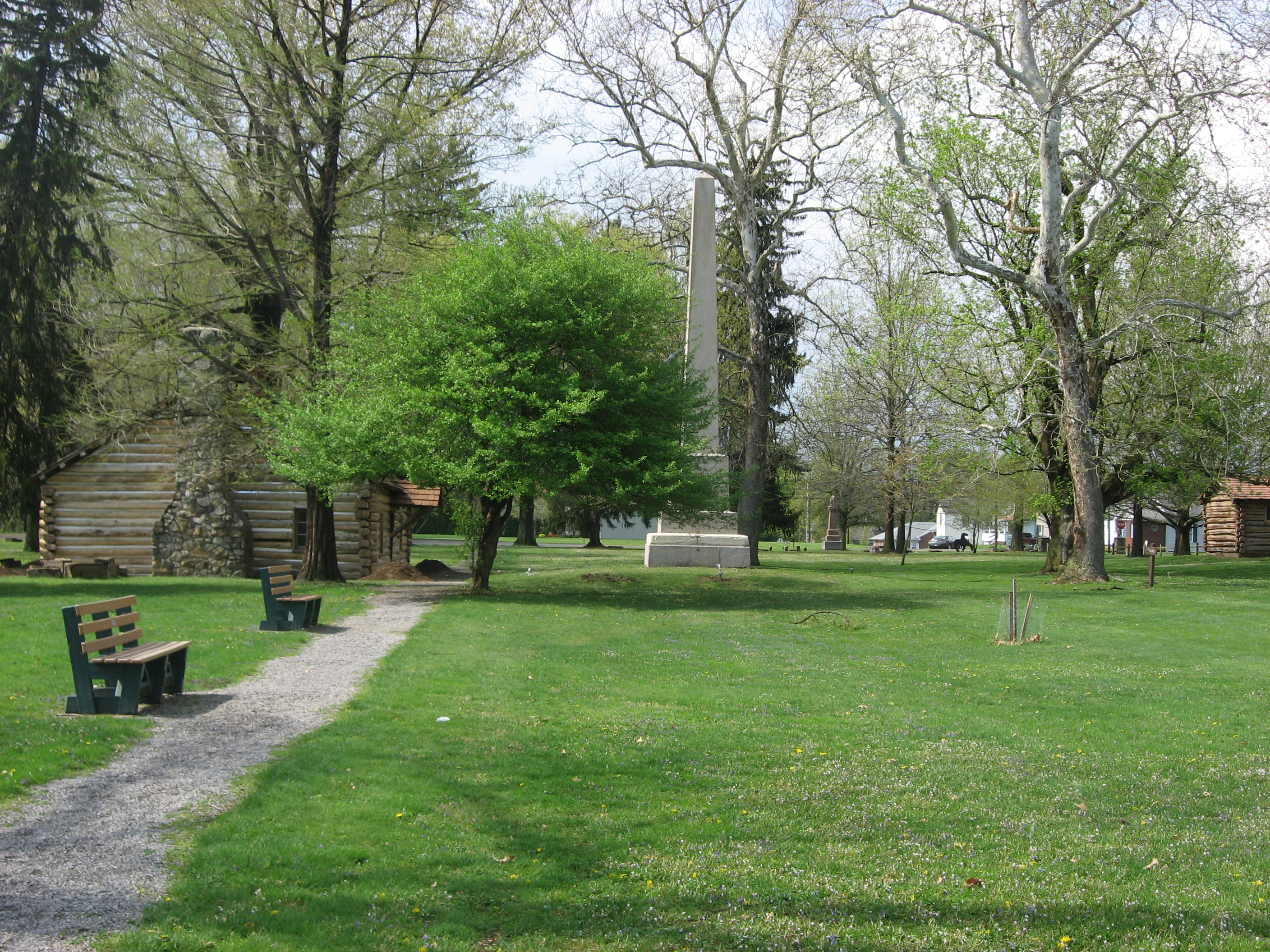
The historical park stands at 352 S. Cherry Street. Its 2026 events page lists a March remembrance and a founding celebration, showing that the place remains an active memorial. It also gives summer museum hours; those should not be assumed to apply in winter. Arrange an off-season visit through the historical society and obey posted ground rules. The reconstructed mission house and cooper’s building help explain the village. Their presence does not make them original killing rooms. The burial mound is a grave, not a place to test a dare.
STORY & LEGENDS
The earliest dated haunting publication located in this research is Haunted Ohio V, published in 2003. The publisher and Ohio History Store identify Gnadenhutten among its subjects. The full chapter was not available for direct examination, so its precise encounter date and wording are not reproduced. Forgotten Ohio attributes its listing to that chapter and discusses Woodyard’s personal impressions. This establishes a locatable publication lead, not the first ghost story ever told about the memorial. The 1870 history was consulted as a historical narrative, not as evidence of a haunting.
ORIGIN STORY
How a massacre became a ghost story
Gnadenhutten also appears in Ohio haunting literature. The disturbing history can make a quiet memorial feel charged before a visitor hears any claim about spirits. A surviving Forgotten Ohio page explicitly says it added the location because of Chris Woodyard’s account in Haunted Ohio V. That is a traceable connection between a specific book and a later website, rather than evidence of many unrelated encounters.
The history deserves more than a haunting label
The site commemorates real people killed while captive. A modern claim about a presence or impression does not become stronger because the historical event was terrible. Equally, questioning a ghost claim does not question whether the massacre occurred. Those are separate questions with different kinds of evidence. A visitor can understand the place through its history and continuing remembrance without accepting a supernatural interpretation.
ALTERNATE VERSIONS
Retellings vary; preserve contradictions rather than combining incompatible details.
WITNESS ACCOUNTS
The survivors and the later haunting claims are different records
The Monument Society narrative describes two boys escaping. One had been struck and scalped but survived by remaining still among the dead. The other concealed himself beneath a house and escaped after dark. The publication attributes part of its narrative to a surviving boy who understood English, but it is a later compilation drawing on several works, not a signed deposition printed immediately after the killings.
The ghost material available here is much thinner. Forgotten Ohio points to Woodyard rather than supplying a collection of independently named local witnesses with encounter dates. No authenticated recording, photograph, or contemporary report of an apparition was established. Repeated descriptions of a place as haunted should not be counted as separate experiences when they trace back to the same book.
MORBID FACTS
A barrel-maker’s tool became a killing instrument
The 1870 account identifies the heavy wooden mallet as a cooper’s tool already available in the building. It says one man killed fourteen people before passing it to someone else because his arm tired. This is a particularly grim reported detail: ordinary equipment for work was repurposed for repeated killing. The exact number and the man’s reported words come through the later narrative, not a weapon examination or an independently verified confession.
Survival depended on appearing dead
In the same account, the wounded boy saw Abel try to rise and watched the killers return to finish him. The boy then stayed motionless and waited for darkness. That sequence explains why a survivor could later describe part of what happened inside the building. It also shows the difference between surviving an initial blow and being allowed to live. No diagnosis or reconstruction of the boy’s injuries is added beyond what the source reports.
The fire did not dispose of the dead
The militia burned the buildings containing bodies. The booklet says the remains were only partly consumed and bones remained exposed until burial much later. A fire therefore added destruction to the village without giving its victims a grave. The modern mound marks an act of recovery and remembrance. It cannot be treated as an untouched cemetery laid out for each person immediately after death.
The stolen property did not vanish with the village
The 1870 writer describes the militia leaving with horses, blankets, other property, and scalps, and says plunder was offered for sale in Pittsburgh. In that narrative, killing and material gain occurred together. This is more specific than saying the village was “destroyed”: its homes were burned while useful belongings were carried away. An inventory or sale record was not located, so exact quantities remain attributed to the narrative.
Even the familiar death total contains an unresolved breakdown
The booklet gives ninety-six overall but divides the victims into forty men, twenty-two women, and thirty-four children. A common modern version gives twenty-eight men, twenty-nine women, and thirty-nine children. Both add to ninety-six. Repeating the familiar total does not resolve the incompatible categories. The human scale is clear, including many children, while a definitive individual roster requires comparison with mission registers and other surviving records.
CURRENT DAY
WHAT WE CAN VERIFY
Confirmed History
- Historical sources establish the massacre of captive Native people on March 8, 1782.
Unverified Claims
- The later haunting tradition does not independently establish a supernatural presence.
Important
- Victim breakdowns, burial chronology, and exact narrative details differ between accounts.
SOURCES
- Monument Society, A True History of the Massacre
- Ohio Memory, The Poor Defenseless Ones Together Bowed in Prayer
- Gnadenhutten Historical Society, Our History
- Gnadenhutten Historical Society, Events and hours
- Forgotten Ohio, Gnadenhutten Memorial
- Haunted Ohio V publisher fact sheet
- Gnadenhutten monument photograph location
HISTORICAL PHOTO GALLERY
A CLOSER LOOK THROUGH THE YEARS
X-UMED
01
/ 04
Gnadenhutten Massacre Site
Monument and cabins at Gnadenhutten
The Gnadenhutten memorial and reconstructed cabins.
IMAGE CREDITS & RIGHTS
Monument and cabins at Gnadenhutten
The Gnadenhutten memorial and reconstructed cabins.
PHOTO CREDIT
Nyttend
LICENSE
Public domain dedication
CHANGES
None.
IMAGE INFORMATION & RIGHTS
IMAGE TITLE
Monument and cabins at Gnadenhutten
CAPTION
The Gnadenhutten memorial and reconstructed cabins.
PHOTO CREDIT
Nyttend
LICENSE
Public domain dedication
CHANGES
None.
The Gnadenhutten memorial and reconstructed cabins.
X-UMED
01
/ 04
Gnadenhutten Massacre Site
Gnadenhutten monument to the Moravian Christian Indian Martyrs
The memorial to those killed at Gnadenhutten.
IMAGE CREDITS & RIGHTS
Gnadenhutten monument to the Moravian Christian Indian Martyrs
The memorial to those killed at Gnadenhutten.
PHOTO CREDIT
Kevin Myers
LICENSE
Public domain dedication
CHANGES
None.
IMAGE INFORMATION & RIGHTS
IMAGE TITLE
Gnadenhutten monument to the Moravian Christian Indian Martyrs
CAPTION
The memorial to those killed at Gnadenhutten.
PHOTO CREDIT
Kevin Myers
LICENSE
Public domain dedication
CHANGES
None.
The memorial to those killed at Gnadenhutten.
X-UMED
01
/ 04
Gnadenhutten Massacre Site
Gnadenhutten massacre engraving, 1852
An 1852 depiction of the massacre.
IMAGE CREDITS & RIGHTS
PHOTO CREDIT
Henry Howe, Historical Collections of the Great West
LICENSE
CC0 1.0
CHANGES
None.
Gnadenhutten massacre engraving, 1852
An 1852 depiction of the massacre.
PHOTO CREDIT
Henry Howe, Historical Collections of the Great West
LICENSE
CC0 1.0
CHANGES
None.
IMAGE INFORMATION & RIGHTS
IMAGE TITLE
Gnadenhutten massacre engraving, 1852
CAPTION
An 1852 depiction of the massacre.
PHOTO CREDIT
Henry Howe, Historical Collections of the Great West
LICENSE
CC0 1.0
CHANGES
None.
An 1852 depiction of the massacre.
X-UMED
01
/ 04
Gnadenhutten Massacre Site
A True History of the Massacre, title page of the 1870 edition
The Monument Society’s account in print, 1870.
IMAGE CREDITS & RIGHTS
PHOTO CREDIT
Gnadenhuetten Monument Society / Library of Congress
LICENSE
Public domain (United States)
CHANGES
None.
A True History of the Massacre, title page of the 1870 edition
The Monument Society’s account in print, 1870.
PHOTO CREDIT
Gnadenhuetten Monument Society / Library of Congress
LICENSE
Public domain (United States)
CHANGES
None.
IMAGE INFORMATION & RIGHTS
IMAGE TITLE
A True History of the Massacre, title page of the 1870 edition
CAPTION
The Monument Society’s account in print, 1870.
PHOTO CREDIT
Gnadenhuetten Monument Society / Library of Congress
LICENSE
Public domain (United States)
CHANGES
None.
The Monument Society’s account in print, 1870.
KEEP EXPLORING
MORE STORIES FROM X-UMED'S DARK ARCHIVE
X-UMED EPISODE/VIDEO
CATEGORIES
Strange Deaths & Crimes
Disasters & Tragedies◆Historical Mysteries
LOCATION & ACCESS
REGOIN
East Central Ohio
COORDINATES
40.354167
-81.434722
ADDRESS
Gnadenhutten Museum and Historical Park, 352 S. Cherry Street, Gnadenhutten, Ohio 44629. Pin is an approximate monument-area reference.
ACCESS
Open to Public
HELP US DIG DEEPER
have a firsthand account, an old photo, or a correction about this place?
SHARE THIS STORY
X
Reddit
Threads
WhatsApp
Email
StumbleUpon
Facebook
SEARCH THE DARK ARCHIVE
⚲
148STORIES
UNEARTHED
UNEARTHED
358MORE STILL
BURIED
BURIED
29% OF THE ARCHIVE UNEARTHED